Carrier verification · TMS · Load tracking
Verify every carrier.
Run every load.
Fraud gets past one-time checks. So we call the owner, get the insurance from the source and check the driver, then give you one clear answer, inside the TMS that runs your loads.
How a verification works
Watch a carrier’s file come together.
A verification isn’t finished until every party has answered: owner, insurance source, dispatcher, driver. Scroll through one.
Step 1 · Lookup
It starts with one number.
Type an MC number. The moment you do, we pull the carrier’s FMCSA record and its history, and the rest of the check starts on its own.
Step 2 · History
See what changed, not just how it looks today.
We keep the FMCSA public-record history, so you see a carrier’s past from day one. Recent changes show as warnings. This carrier looks healthy today, but its phone and email changed four days ago.
Step 3 · Owner and dispatcher
We don’t ask carriers if they’re legit. We check.
A short recorded interview calls the owner on the registered phone, not a number someone typed into a form. Spoken answers are checked against the federal record. Then a one-time code and an ID and selfie check. The owner also confirms or rejects the dispatcher you named. “Not recognized” is Do not book.
Step 4 · Insurance
We get the certificate straight from the source, not from the carrier.
It’s read automatically and checked against the FMCSA filing. If the insured is a different company, that’s an automatic Do not book. VINs and drivers get checked too, when the policy lists them. Lapses are also watched through FMCSA registration data.
A different company as the insured = Do not book. Overriding it takes a person and a written reason.
Step 5 · Old phone numbers
Old phone numbers don’t lie.
We call and text the numbers this carrier used to have, oldest first, once the owner has finished. The person who used to answer is the person a fraudster least wants us to reach. A denial fails the verification.
Step 6 · Driver
Know who’s really coming for the load.
The driver gets a text link and takes five photos with the phone’s camera. License details are matched against the state DMV record in 44 states; an MVR covers the rest. The face on the license is compared with a live selfie. Then driver and truck are checked against the policy, when the policy lists them.
Step 7 · The answer
One clear answer, with the evidence behind it.
About 40 cross-checks end in one of three answers: OK to book, Needs your review, or Do not book. This carrier: OK to book, 93. The decision email carries the evidence PDF, finding by finding. Not every file ends this way. The card shows you the other ending.
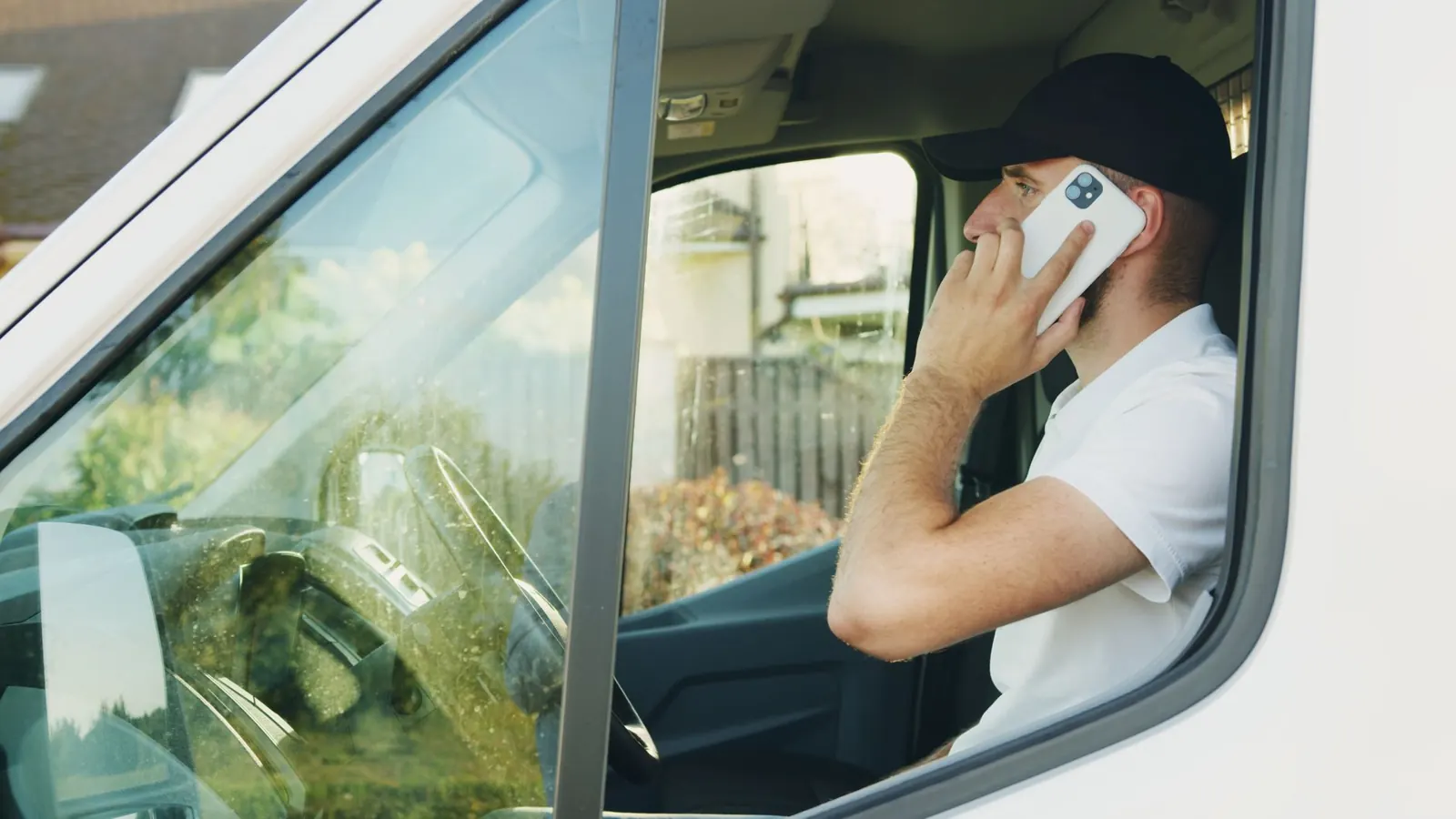
Somebody always answers the number on file. We check whether it’s the right somebody.
Verification + TMS
Your dispatch board knows what the verification found.
A vetting tool hands you a report. Here, the answer goes straight to the board you dispatch from, so it doesn’t get lost on a busy day.
- You tender to carriers that are OK to book and not expired. Your do-not-use list and insurance minimums always apply.
- Verifications expire: 30 days by default, sooner if the insurance runs out. Expired means “Re-verify to book them.”
- Exceptions leave a name and a reason: a Do not book overridden in writing, a carrier an admin marks trusted.
- Bad news finds you. Changes to authority, out-of-service status or insurance send you an alert.
tender → MC-2190418 · ATL → DFW · $2,140
✕ BLOCKED: verification expired Nov 1, 2026
re-verify to book them (one click, pre-filled)
tender → MC-2184736 · IND → CLT · $2,350
✓ SENT: OK TO BOOK 93 · valid through Dec 3
carrier accepts by secure link. no login, no account.
How we compare
Vetting tools vet. TMS platforms run loads. Happy Tactic does both.
| Capability | Vetting tools | Traditional TMS | Happy Tactic |
|---|---|---|---|
| Vets the carrier | ✓ | ✕ | ✓ |
| Shows the carrier’s change history | ✕ | ✕ | ✓ |
| Runs the load end to end | ✕ | ✓ | ✓ |
| Uses the verification result at dispatch | ✕ | ✕ | ✓ |
One platform, three jobs
Verify. Operate. Track.
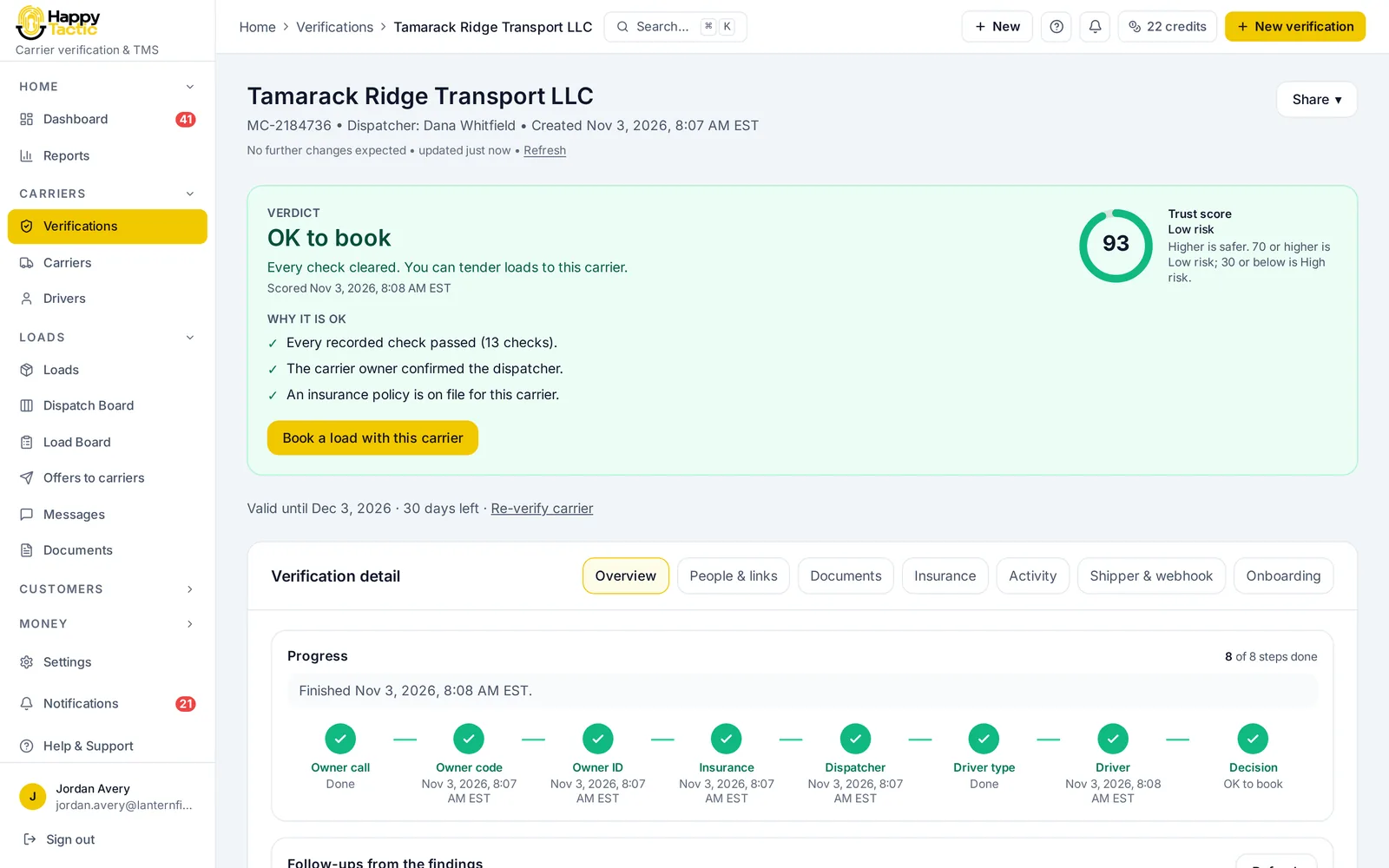
OK TO BOOK RESULT · SAMPLE DATA
Verify
Know who’s really behind the MC number. Owner interview, insurance from the source, driver check, and one clear answer with the evidence attached.
See verification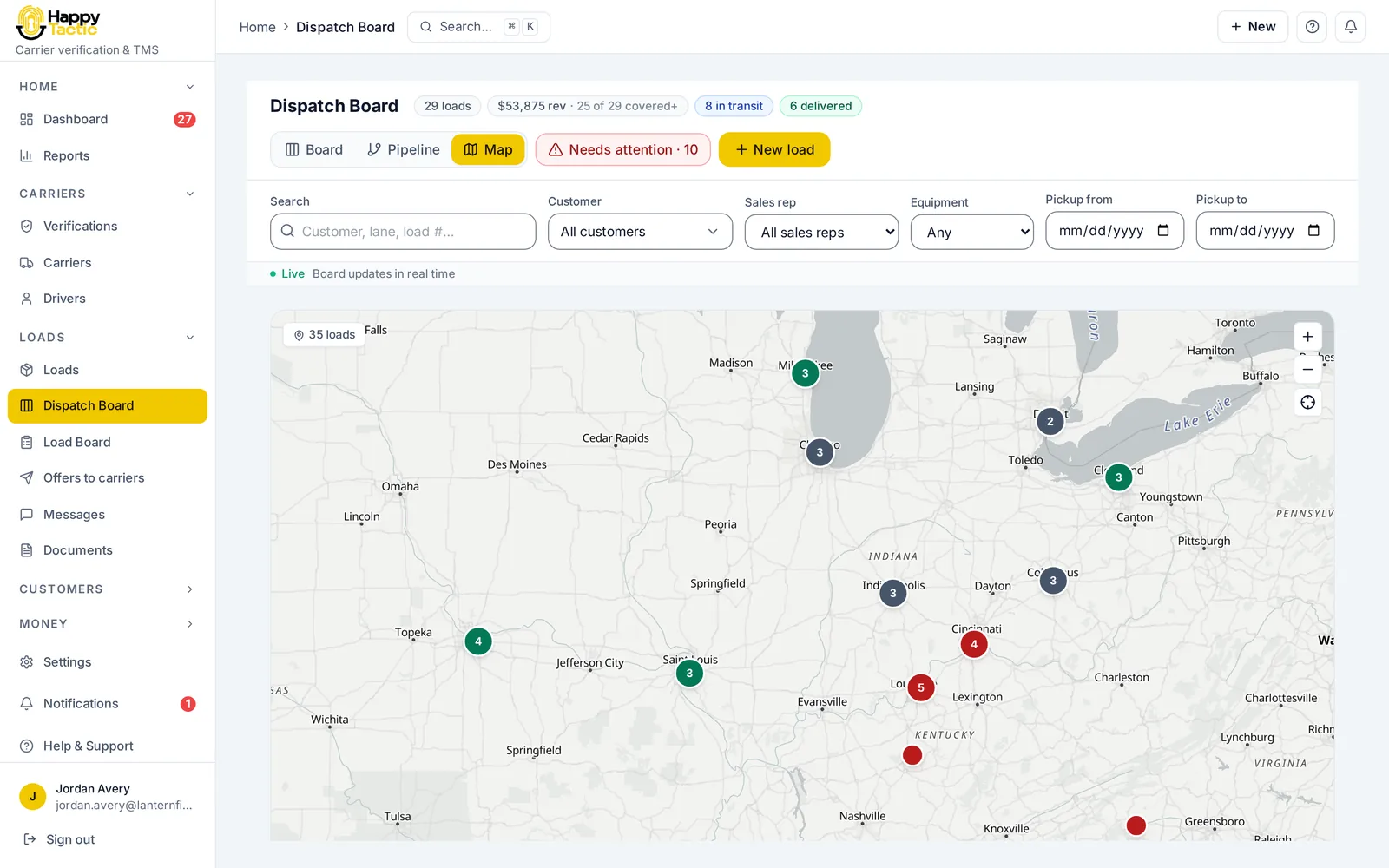
DISPATCH BOARD, MAP VIEW · SAMPLE DATA
Operate
A complete TMS: dispatch board with a live map, tenders with counter-offers, invoicing, carrier pay, factoring, 20+ reports and QuickBooks.
See the TMSDRIVER’S TEXT LINK · ILLUSTRATION
Track
Drivers get a text link: no app, no account. Customers get a tracking page with no login. The Happy Tactic Driver app for Android adds background GPS.
See trackingWhat else you get
Stop theft. Stop chasing. Stop retyping.
Verification
Spot one person behind two carriers
The same computer on another carrier’s check holds the file for review. VPNs and impossible travel get flagged too.
Verification
Warned about rejected dispatchers
If a carrier owner rejected a dispatcher’s number, you’re warned, on any broker’s check.
Verification
Re-verify known carriers faster
A code, a selfie, and the results you already have.
TMS
Catch theft in motion
Wrong phone, internet-calling number, faked location, truck far from pickup: the load gets flagged.
TMS
Stop payment-redirect fraud
Changes to payment details wait for approval.
TMS
Stop retyping tenders
Turn a tender into a draft load, and see dark trucks and no-shows first.
From one of our founders
Fraud found my brokerage the way it finds everyone’s: through a carrier that looked clean in every point-in-time check. So we built the verification we wished existed — one that reads a carrier’s history, calls the owner on the number of record, and gets the insurance certificate straight from the source. Then we kept going: a full TMS, so the system that verified the carrier is the system that runs the load. And tracking that asks nothing of a driver but a text message. Nobody else does all three. That’s not a slogan — it’s why this company exists.
— Jade Rush · Co-founder & CEO, Happy Tactic · practicing freight broker

A verification isn’t a one-time certificate. We keep watching and warn you when something changes.
Questions brokers ask
Straight answers.
What does the carrier actually have to do?
The owner answers a short recorded call on the registered phone, enters a one-time code, does an ID and selfie check (a returning owner only needs a selfie), completes the insurance step, and confirms or rejects the dispatcher you named. The dispatcher opens their own secure link. The driver takes five photos from a text link. No accounts, no passwords, no app required.
How long does a verification take?
Minutes, not days. The record checks start the moment you enter the MC. After that, the pace is set by how fast the owner answers the phone, the certificate comes back from the source, and the driver takes five photos, not by your team chasing paperwork.
What happens after a carrier is approved?
We keep watching. We re-check the carrier’s record about every five minutes, and changes to authority, out-of-service status or insurance alert you right away. Verifications expire after 30 days by default, sooner if the insurance expires, and an expired carrier can’t get new tenders until it’s re-verified.
What if a carrier fails verification?
You get Needs your review or Do not book, with the evidence behind it, finding by finding. Automatic Do not book includes: insurance expired; insured is a different company; liability below the federal minimum; FMCSA “not allowed to operate” or out of service; an owner who says “not my company” or doesn’t recognize the dispatcher; a denied phone change; and a truck whose VIN decodes as a car. A person can override a blocking reason with a written reason, but FMCSA “not allowed to operate” blocks every booking.
What does it cost?
A monthly base plus a per-verification rate. Hotshot is $150 a month, verification-only, pay-as-you-go. Regional at $299 adds the full TMS with 15 verifications included. Plans scale to Fleet at $750 with 50 included, and Enterprise is custom. Details are on the pricing page.
Check your next carrier before you book it.
Book a demo, or start with a conversation. The founders are on the line either way. Bring a carrier you’re unsure about.